01 · Capcom · PlayStation, 1999
Resident Evil 3: Last Escape
The retail disc already changes item spawns, gunpowder and puzzle solutions between runs. And Nemesis follows you through doors, which still feels unfair today.
~/beyond / games
Once you know where every key is, survival horror stops being horror. So I shuffle it.
I build them in C#, Python, Lua and Go.
These games only work while you do not know what is behind the door. My tools move the keys, the items and the enemies, and I am lost in a map I know by heart.
The worst bug a randomizer can have is a key locked behind its own door, because the player finds out two hours in. So my solver walks the whole map before it lets a seed out.
This is where the day job helps. RE Engine keeps every room in scn.19 and pfb.16 archives, and Capcom does not document them. I read them the way I read malware, then rewrite the objects inside.
A small version of that solver. Shuffle the items, swap two rooms yourself, or break it on purpose and watch it refuse the seed.
Click two rooms, or press Enter on them, to swap their items.
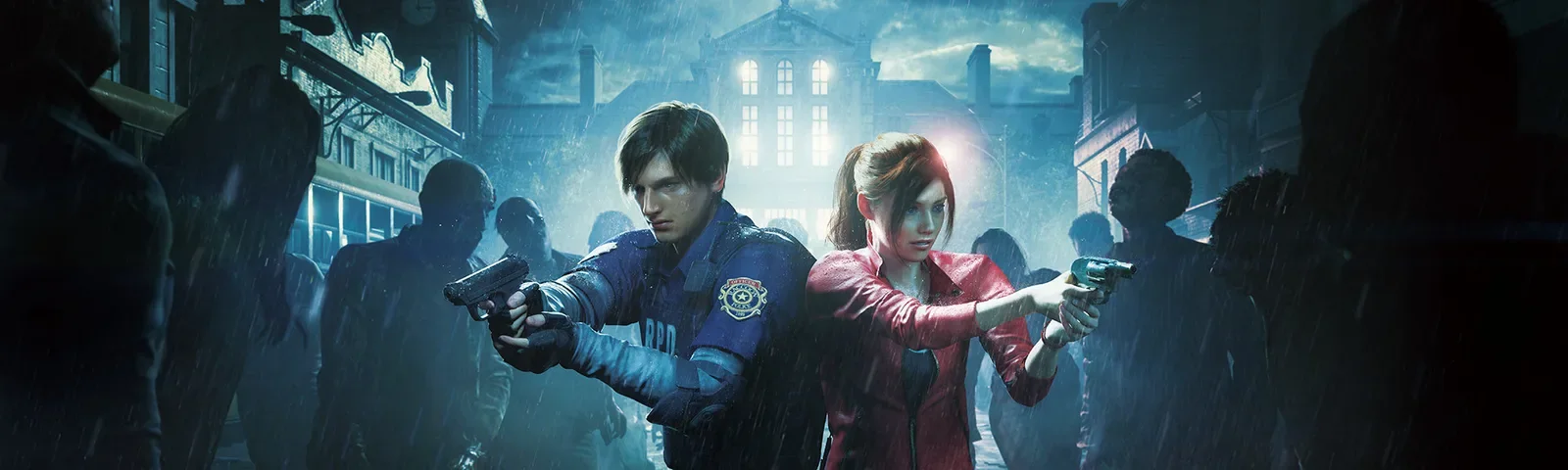 Resident Evil 2 RemakeRandomizer
 Resident Evil VillageRandomizer
 Onimusha Way of the SwordRandomizer
 Resident Evil 1, 2 and 3REviewer: live timer, inventory and enemy tracking
Game art belongs to Capcom and Koei Tecmo. Resident Evil and Onimusha are their trademarks. See them on the Work page.
Resident Evil had 2 MB of RAM. Almost everything I like about it comes from that limit.
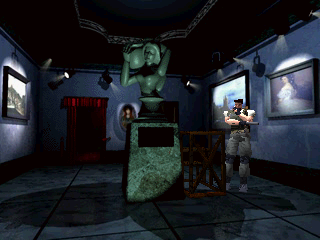
The PlayStation could not light a detailed room in real time. So every room is a painting, and only the characters are 3D. Even the door animation is a trick: it hides the disc loading the next room.
People complain about tank controls. I think they are the only scheme that survives a camera cut, because up always means forward. Walk the corridor below and you will feel it.
Step 0 of 6 to first camera cut · Camera 1 of 3
Camera 1 sits behind you and watches the west end of the hall. Tap the arrows to step, or hold to walk. With a keyboard, focus the map and use the arrow keys. Up always walks forward, wherever the camera points.
I did not invent anything. Two official releases already shuffled their own items in 1999.
The retail disc already changes item spawns, gunpowder and puzzle solutions between runs. And Nemesis follows you through doors, which still feels unfair today.
Two PlayStation CDs of Resident Evil 2 squeezed onto one Nintendo 64 cartridge, video included. It should not have been possible. It also shipped with an official item randomizer.
Read the SUPERJUMP article ↗Try stealer, URSNIF, randomizer, PEB.
↑↓ move · Enter open · Esc close ·
Tap a result to open · Cancel to close
No match for that query. Try a broader term, or browse all articles.